


Key Takeaways
- Not all experts have the same level of specialization or experience.
- Credentials alone should not be the only evaluation factor.
- Communication style and professionalism matter significantly.
- Independent, objective insight is essential in many professional evaluations.
- Reviewing background, testimony history, and areas of expertise can help reduce risk.
Why Finding the Right Expert Matters
Whether you are seeking professional insight for a legal matter, technical evaluation, medical review, or specialized consultation, choosing the right expert can significantly impact the quality and clarity of the outcome.
The challenge is that expertise is often difficult to evaluate online. Many directories provide limited information, inconsistent credentials, or unclear experience histories, making it difficult to confidently compare professionals.
A qualified expert should not only possess strong credentials, but also demonstrate clear communication, professionalism, and relevant real-world experience within their field.
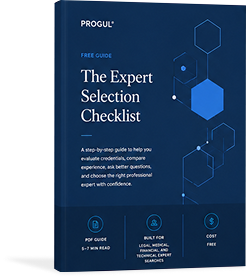
Download the Expert Selection Checklist
Get a step-by-step PDF guide to help you evaluate credentials, compare experience, ask better questions, and choose a qualified professional with more confidence.
Related article: What to Look for in a Qualified Expert Witness
What Defines a Qualified Professional Expert
A qualified professional expert is typically someone with substantial education, training, industry experience, and specialized knowledge within a specific field.
Depending on the industry, this may include:
- Board certifications
- Professional licenses
- Advanced degrees
- Research experience
- Clinical or operational expertise
- Testimony or consulting experience
- Publications or industry recognition
However, qualifications should always be evaluated within the context of your specific needs.
An experienced orthopedic surgeon may not necessarily be the best fit for a highly specialized spinal injury review. Likewise, a financial consultant with decades of experience may not specialize in forensic accounting or litigation support.
The most effective experts combine:
- Specialization
- Credibility
- Communication
- Professionalism
- Relevant Experience
Understanding Different Types of Experts
Professional experts can serve many different roles depending on the situation.
Common Categories Include
Medical Experts
Professionals who provide evaluations, independent reviews, injury analysis, treatment insight, or expert testimony related to healthcare and medicine.
Engineering Experts
Specialists who evaluate structural systems, construction issues, technical failures, safety concerns, and infrastructure-related matters.
Financial Experts
Professionals focused on accounting, valuation, forensic analysis, economic damages, bookkeeping, or financial consulting.
Technical & Industry Specialists
Experts with specialized operational knowledge across manufacturing, software, compliance, operations, safety, and other technical industries.
How to Evaluate Credentials and Experience
One of the most important steps is carefully reviewing an expert’s background and professional history.
Areas To Review
- Education & Certifications
Review degrees, certifications, board credentials, and professional affiliations. - Industry Experience
Years of experience alone should not be the deciding factor, but relevant experience within a specialized field is important. - Communication Ability
Strong experts are often able to explain complex topics clearly and professionally. - Professional Reputation
Look for consistency, credibility, professionalism, and clear presentation of expertise. - Relevant Case or Consulting Experience
Depending on your needs, prior testimony, evaluations, consulting work, or industry-specific experience may be highly relevant.
Pros and Cons of Using Independent Professional Experts
PROS
- Access to specialized knowledge
- Objective third-party insight
- Professional evaluations and analysis
- Greater clarity in technical situations
- Improved understanding of complex topics
CONS
- Expertise levels can vary significantly
- Some professionals may overspecialize
- Communication styles differ between experts
- Availability and timelines may vary
Subscribe for more professional insights
Receive new articles, expert resources, and professional guidance directly to your inbox
[ SUBSCRIBE BOX HTML ]Questions to Ask Before Hiring an Expert
Before engaging any professional expert, consider asking:
- What areas do you specialize in?
- How long have you worked in this field?
- Have you handled similar evaluations or reviews before?
- What is your general process?
- What information or documentation is required?
- What timelines should be expected?
- Are consultations available?
Having these conversations can often reveal as much about professionalism and communication style as credentials themselves.
Red Flags to Watch For
While many professionals provide exceptional expertise, there are also situations where caution is warranted.
Potential Red Flags
- Incomplete professional information
- Vague credentials or unclear specialization
- Poor communication responsiveness
- Overpromising outcomes or guarantees
- Lack of verifiable experience
- Difficulty explaining complex topics clearly
Professionalism and transparency are often strong indicators of credibility.
Communication and Professionalism
The ability to communicate clearly is frequently underestimated when evaluating experts.
Strong professionals are often distinguished not only by technical expertise, but by their ability to:
- Explain findings clearly
- Communicate objectively
- Remain organized
- Provide structured insight
- Respond professionally
This becomes especially important in collaborative environments involving legal teams, organizations, medical reviews, technical evaluations, or consulting discussions.
Independent Reviews and Objectivity
In many situations, independent insight is essential.
Objectivity helps ensure that evaluations remain focused on evidence, documentation, professional standards, and specialized expertise rather than assumptions or bias.
Professionals who present balanced, transparent opinions often provide the greatest long-term value.
Final Thoughts
- Finding the right professional expert should feel clear, professional, and approachable.
- The strongest experts typically combine:
- Specialized knowledge
- Relevant experience
- Professionalism
- Communication skills
- Objective insight
By carefully reviewing qualifications, expertise areas, and professional backgrounds, individuals and organizations can make more informed decisions with greater confidence.
Frequently Asked Questions
What is a professional expert?
A professional expert is an individual with specialized education, training, or experience within a specific field who provides insight, evaluations, consulting, or professional analysis.
How do I verify professional credentials?
A professional expert is an individual with specialized education, training, or experience within a specific field who provides insight, evaluations, consulting, or professional analysis.
What industries use professional experts?
Medical, legal, engineering, financial, technical, construction, insurance, and operational industries commonly utilize professional experts.
Are expert consultations always related to legal cases?
No. Many experts also provide independent evaluations, technical consulting, second opinions, operational reviews, and professional guidance outside of legal matters.